
Let me give you the simplest analogy I know.
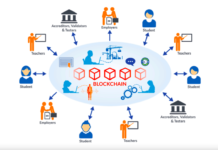
Imagine a Google Sheet that thousands of people can see — but no single person can edit, delete, or tamper with without everyone else knowing immediately.
That’s blockchain. Not cryptocurrency. Not NFTs. Just a shared, tamper-proof record-keeping system — and some of the world’s smartest companies are quietly using it to cut costs, build trust, and move faster.
Here’s what it looks like in the real world:
Walmart & IBM — Tracking food from farm to shelf in seconds
Before blockchain, tracing a contaminated food item through Walmart’s supply chain took nearly 7 days. After deploying IBM Food Trust (built on blockchain), it takes 2.2 seconds.
That’s not a tech win. That’s a food safety win, a liability win, and a customer trust win — all in one.
De Beers — Proving a diamond is conflict-free
The diamond industry has struggled for decades with ethical sourcing concerns. De Beers built Tracr, a blockchain platform that tracks every diamond from mine to jeweller — recording its origin, characteristics, and chain of custody at every step.
Buyers now have proof, not just a promise. That’s a competitive advantage you can sell.
Change Healthcare — Securing patient records
Medical records are among the most frequently forged and mishandled documents in the world. Blockchain-based systems are now being piloted to give patients ownership of their own health data — shareable with doctors instantly, but tamper-proof and private.
In an industry where a single data breach can cost $10M+, that’s not just innovation. That’s risk management.
Maersk & Cross-Border Payments
International shipping has always been a paperwork nightmare — bills of lading, customs forms, letters of credit, all moving slower than the ships themselves. Maersk partnered with IBM to digitize and blockchain-secure these documents, cutting shipping documentation processing time by up to 40% and reducing fraud risk dramatically.
So, should your business care?
Not every business needs blockchain today. But here’s the test: Do you rely on records, contracts, or transactions that pass through multiple hands — and where trust or verification is a bottleneck?
If yes, blockchain deserves a spot on your radar.
The leaders who will benefit most aren’t the ones who understand the code. They’re the ones who understand the business problem well enough to recognise when this tool solves it.
Bookmark this. The next time someone pitches blockchain in a boardroom, you’ll know exactly what questions to ask.