
If you run a sales team — or you’re the founder still closing your own deals — you’ve probably heard the pitch: “Let AI listen to every call and tell you exactly what your best reps do differently.”
That’s the promise of conversation intelligence software. But the category has quietly split into two very different worlds: enterprise platforms built for 250-person sales orgs, and lighter tools built for teams that just want good notes and a bit of coaching insight without a six-figure contract.
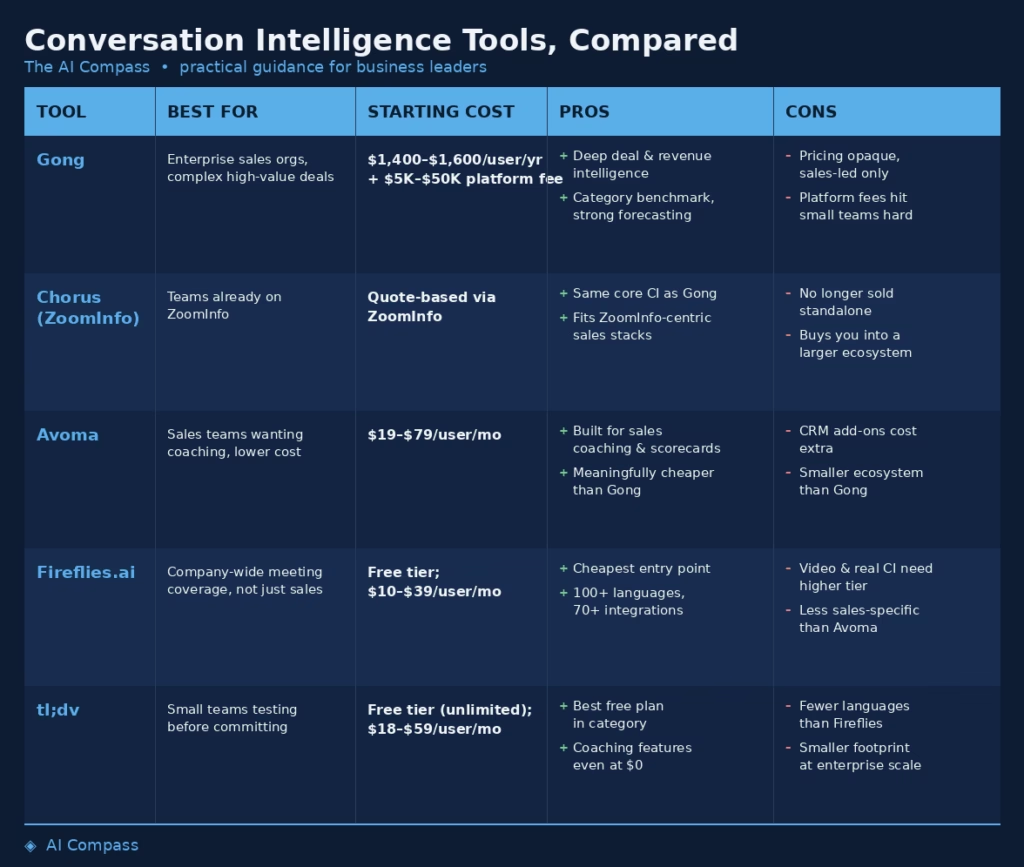
Here’s how the main players stack up, and who each one actually fits.
The comparison
Practical suggestions, by situation
If you’re running a 100+ rep sales floor and forecasting accuracy is a board-level concern: Gong is still the default for a reason — but go in knowing pricing is opaque by design. Push explicitly for “Core-only” pricing before accepting a bundled quote, and time your negotiation to Gong’s quarterly quota deadlines (late March, June, September, December) if you want real leverage.
If ZoomInfo is already central to your sales stack: Chorus is worth a look simply for the integration, not because it beats Gong or Avoma on standalone merit.
If you have a sales team but not a Gong-sized budget: Avoma is the sensible middle ground — coaching and deal analytics without the enterprise price tag or the platform fees.
If your need is company-wide meeting notes and only some of that is sales: Fireflies is the more versatile buy per dollar, especially if you operate across many languages or tools.
If you’re not ready to commit to anything yet: Start with tl;dv’s free tier. It’s the most generous entry point in the category, and it will tell you fairly quickly whether conversation intelligence earns its keep in your workflow before you spend a dollar.
The bottom line
The conversation intelligence category has matured to the point where “should I get Gong?” is often the wrong question. The better one is: what decision am I actually trying to make better — coaching, forecasting, or just not losing good meeting notes? Start there, and the right tool gets a lot easier to see.
What’s your experience been — did an enterprise tool earn its price tag, or did a lighter option quietly do the job? Curious to hear how others have navigated this.